Keeping Safe This Summer
This title may bring to mind thoughts of warnings whilst on holiday of “not getting out of your depth in the sea”, “not jumping in due to hidden obstacles (dangers) underneath the surface” and “wearing sensible clothing and using sun cream to protect ourselves from the harmful effects of sunburn”. It is easy to enumerate the physical dangers of the summer and holiday time but what of the digital dangers when we have time on our hands?
The digital world we live in has brought many benefits in the way we can communicate and interact with, through digital connectivity and social media, like-minded friends and relatives who may be living at a distance. Yet we live in a fallen world and things that bring benefits can easily become idols, time-wasters, and addictions that impact on our behaviour, sleep patterns and well-being. Sadly, there are also individuals who would use digital technology to defraud people of their money and possessions, enticing people to share information about themselves and/or persuade them to commit wrong and unlawful acts.
How we need to heed the warnings in the Bible to walk circumspectly – being aware of everything that is going on around us, redeeming the time because the days are evil (Ephesians 5:15-16) and being sober and vigilant.
This post draws on sources we have seen recently highlighting the digital dangers of the summertime and holidays.
The first is from “Protect Young Eyes” website where the author highlights three reasons why the summer brings increased Internet risk. The first reason given is “new places” such as holiday accommodation, children spending time at friends’ houses and other attractions that may have Internet access. The author makes the point that the same rigour that is used in the family home to protect against Internet risk should be used away from the home. He makes the point “Then, guard those doorways in the same way you filter and monitor at home” whether through guarding the location, the wireless router or the device.
The second reason is “new patterns”, the author highlights that during the school year, weekday bedtimes are regular and predictable however in the summer these can become looser. The author then draws on the experience of “Protect Young Eyes” that Internet temptations are magnified at night and describes the concept the “Toxic Trio” where bedrooms + boredom + darkness (along with Internet access) = increased digital risk.
Looking at the ‘equation’ the ‘ingredient to remove’ would seem to be blocking Internet and social media access at night however this may, in turn, bring the challenges.
The third reason is “new people”, the author points out that children may spend more time with friends and poses the question “do I know enough about the Internet rules that exist in each home where my kid is spending time this summer?”. The author admits that this is a difficult one to deal with!
The post “3 Reasons Summer Internet Risk Goes Up, Up, Up!” can be found by clicking here.
“Enough Is Enough” is an organisation based in the USA that focuses on making the Internet safer for children and families through raising awareness and providing resources. They are particularly focused on highlighting the extreme dangers of the Internet in the exploitation of victimisation of children. “Enough Is Enough” also has a website “Internet Safety 101” that is a digitally-based Internet safety resource to help parents and other adults to protect children from Internet dangers.
“Enough Is Enough” recently published a post on cyber safety and summer sleepovers. The post raises a number of questions, for consideration by parents, to ensure a cybersafe sleepover. Although, the questions may seem overprotective/reactive nonetheless how far can it be assumed that children and young people are safe from digital dangers wherever they are? The post also deals with the safety challenges of hours spent in the online gaming world and can be found by clicking here.
Ultimately, in any relationship there needs to be an element of trust between children and their parents however trust will only be built and developed where there is a clear identification of the responsibilities of those involved and the keeping to them. Hence the need to have ‘ground rules’ which are communicated and the reason for the rules explained. This applies to many areas of life including the way we use digital technology and build a framework for children and young people.
The “Internet Safety 101” has an infographic on its website “5 Proactive Steps To Mitigate Online Harms to Your Children During Covid-19”. Although written during the Covid pandemic, the five steps are a useful framework for parents to reflect on how they protect their children from online harms. The steps include:
- Review safety rules and software tools
- Set up parental control tools on all Internet enabled devices
- Build an atmosphere of trust & communicate regularly
- Avoid sharing personal information
- Establish Internet rules
A copy of the info graphic can be found by clicking here.
The “Internet Safety 101” homepage has a series of eight online resources covering a range of topics to help parents in protecting their children. The section on Safety and Prevention looks particularly useful and when the pages visited there is a button “See More” which when ‘clicked’ takes you to a menu of topics; the ‘Youth Pledge’ and the ‘aged-based guidelines’ look particularly helpful. This latter web page provides links to specific guidelines by age groups which identify the particular characteristics of the age group and guidelines that may help in as discussion points in building trust and understanding in the use of digital technology. The Safety and Prevention webpage can be found by clicking here and the Internet Safety 101 homepage can be found by clicking here.
We have also taken this opportunity include in this post feedback we received from a supporter regarding ParentShield which was mentioned in CViE Education Matters March 2022. You can read the article by clicking here.
“I saw your article requesting contact from anyone with experience of using “ParentShield” and would like to put our experiences forward for inclusion anonymously as I really do feel strongly that parents should be made more aware of this service through schools. Our sons school is pretty well up on it, but his friends schools, less so.
We have been using ParentShield for a few months now and it’s a wonderful service!
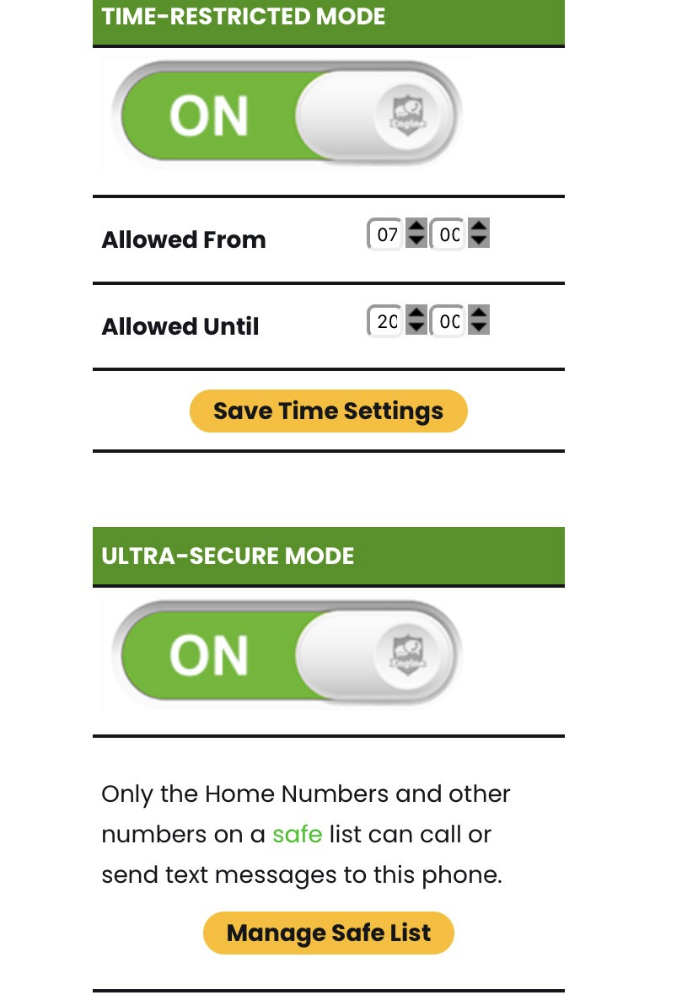
The parent app is really easy to use. We have enabled time controls to stop use after bedtime and have also set the block for use at school, which is a separate switch and still allows calls to my wife and I if needed in an emergency, which we think is very well thought out.
As it’s his first phone, and we let him have it earlier that anticipated, we also have enabled the Ultra-Secure mode, which allows you to add numbers into a safe list so the phone can only call or text those numbers. And only be called and text by them too.
We’ll take this off when we’re more comfortable with his usage.
We also have data totally disabled too; again, that’s just a switch in the portal to allow it or disallow it as you need.
There are loads of features give them a phone in a much safer way than a standard sim, so we think all schools should be making parents more aware of this.”
We would be pleased to hear from those who are interested in the work of CViE as to their thoughts on how real are digital dangers? What strategies have parents and others (such as teachers) used to raise awareness of digital dangers to children and young people and how effective have these being? What other digital technology topics need to be tackled? What resources have people found useful in helping to understand and communicate the challenges of digital technology with children and young people? Please feel free to contact us at enquiries@cvie.org.uk.
[NOTE: Although we make every effort to ensure these links mentioned are accurate, up-to-date and relevant, CViE cannot take responsibility for content and pages maintained by external providers, nor do we endorse all information, religious views, products mentioned, or opinions posted on these third-party websites.]