Evolution: A Review of the BBC Series – Part 1
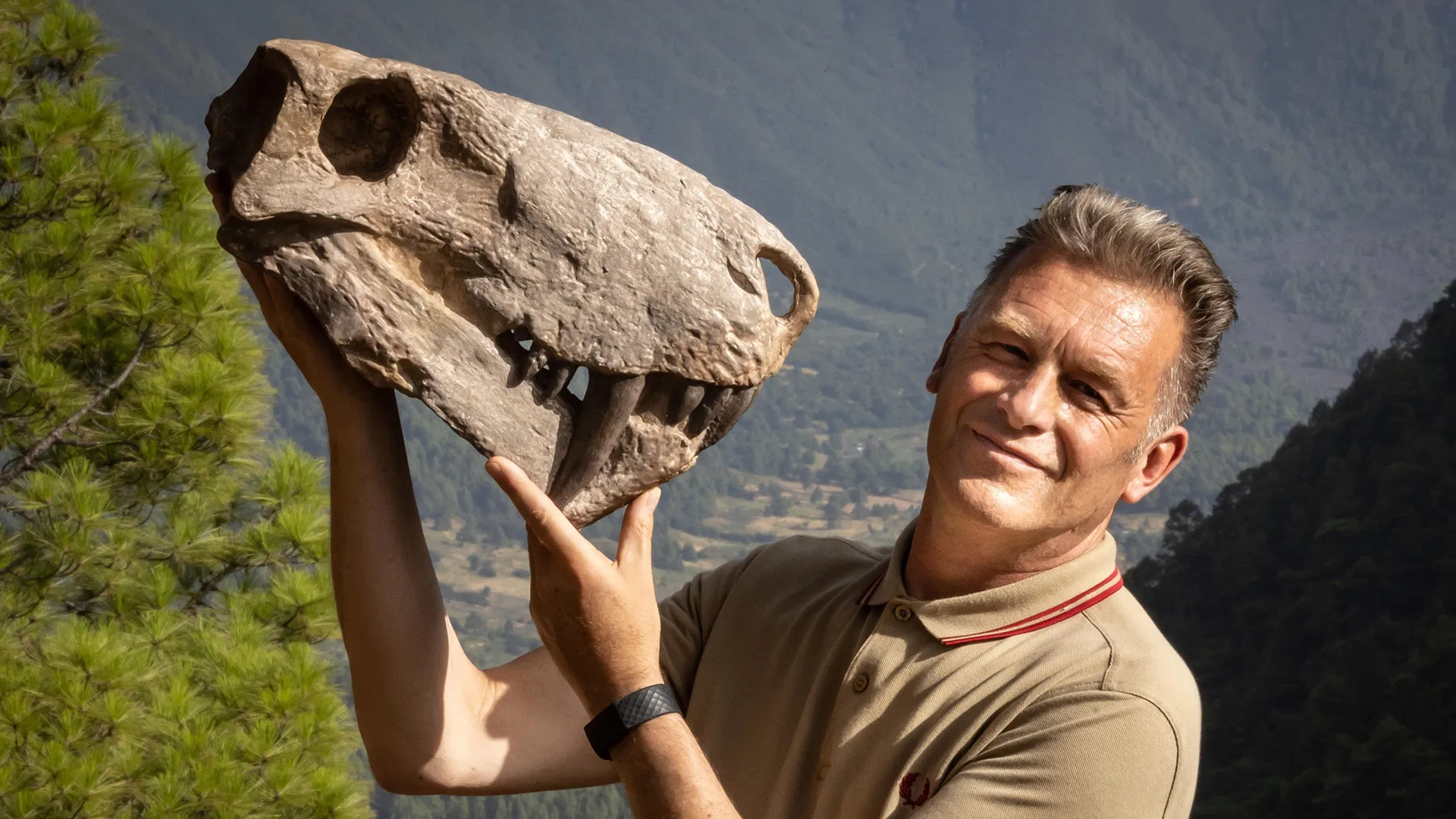
Over the summer of 2026, the BBC released a much publicised TV series called Evolution presented by Chris Packham. This multi-part, in-depth review of the series has been prepared for CViE by a secondary school Head of Science.
This is Part 1 which provides an introduction to the review, an overview of the series, and general reflections on it from a Christian perspective.
Part 2 will look at some examples of poor science in the series.
Part 3 will consider how the series fits in with the national curriculum and how it may be used in schools. It will conclude with some suggestions of further useful resources.
Introduction
In July 2026 the BBC released the new series Evolution, billed as a nature documentary which tells “the extraordinary story of how life on Earth has changed over more than four billion years” and which has been received to great critical acclaim in the media and popular science communities. “Evolution should be compulsory viewing for everyone over the age of five”, according to the BBC Inside Science presenter, Adam Rutherford, writing in the Financial Times.
Given this positive reception and the visually stunning nature of the programme, it is highly likely that it will be watched by many and even shown in school Biology lessons when Darwin’s Theory of Evolution is being taught. This review is written with this in mind and will be structured as follows:
- An overview of the series?
- A Christian perspective.
- Some specific examples of poor science in the series.
- How the series fits in with the national curriculum and could be used in schools.
- Resources to help equip you and your family.
An Overview the Series?
Evolution is a five part series, presented by Chris Packham, which tells the story (from a long-age evolutionary perspective) of how life on earth has changed over more than four billion years. The series tells this story through narrating stages in the evolution of five organisms with which we are all very familiar from the natural world today. Each episode homes in on a particular feature of the organism and traces how evolutionary biologists believe it came about:
- Episode 1: The Elephant – focuses on the shared ancestry of all organisms and the journey of a tiny cell evolving into a massive elephant.
- Episode 2: The Ostrich – looks at the evolutionary history of birds with a focus on reproduction and sex.
- Episode 3: The Bat – explores the feeding habits of organisms and specialised adaptations which assist in locating prey, such as echolocation.
- Episode 4: The Dolphin – focuses on the development of the senses and intelligence.
- Episode 5: The Horse – looks at the evolution of movement and speed.
The series is produced by the BBC Science team in collaboration with more than 600 scientists worldwide and guidance from the Series Academic Consultant Professor Peter Holland FRS. The BBC’s own description of the series can be read here and this is the official trailer.
As well as much visually stunning actual video footage of the natural world, the series also contains 79 minutes of photo-real visual effects (VFX) which “brings to life” over 20 supposed creatures from evolutionary history.
Each episode ends with a section on “The Evidence” which involves a selection of scientists talking about how things such as the fossil record or DNA sequencing support the evolutionary narrative presented in the episode. I will comment further on this and the VFX footage in more detail later in the review.
A Christian Perspective
Over the years I have enjoyed watching the various documentaries produced by the BBC which David Attenborough has narrated. Although these mention evolution and long-age evolutionary timescales on occasion, their overwhelming focus is on the wonders of the natural world. As Bible believing, young earth creationists, we can watch these and marvel at the wonders of God’s creation. Although the media has hailed Chris Packham as the successor to David Attenborough, Evolution is a series with a wholly different tenor; it sets out to tell the story of four billion years of evolutionary history as a fact, and so directly conflicts with the Bible’s ~6000 year history, starting with creation.
From the outset the series is overtly anti-design and anti-creation. Within the first few minutes of Episode 1 Packham states,
“Across our natural world, life has taken on countless forms: wondrous, strange and endlessly diverse. It’s easy to imagine that all of this is, like, somehow preordained, that it’s been made, a world of balance and purpose. But the truth… the truth is much wilder. This is a world of survivors… behind it all is the unstoppable force of evolution.”
Evolution leaves no room for God or for questioning the evolutionary narrative, a position which is reinforced repeatedly throughout the series. There is no reference to the disputed nature of the evolutionary narrative, or that there are many academic scientists who do not subscribe to it. It is also noteworthy that, although Packham asserts that evolution is a chance process with no intelligent direction, he frequently uses language which implies otherwise, for example:
“How did evolution come up with…?” (Episode 1)
“nature’s solution” (Episode 2)
“One thing we know for certain. Our brains simply would not exist without the power of evolution, that blind journey of change, of innovation, of exquisite beauty.” (Episode 4)
A major concern with the series is that it frequently presents theory, and even fabricated fiction, as fact. A particularly problematic example of this is the 79 minutes of photo-quality VFX video footage which portrays over 20 creatures, asserted to be from the distant past, which have been reconstructed from, often scanty, fossil records or traces of DNA, and brought to life by modern computer technology. Using technology to help us visualise what some of these extinct organisms may have looked like, or how they might have behaved, would be fine if the narration made clear that these representations are far from certain. However, the animation is narrated in exactly the same present-tense style as real footage of current living organisms, which could easily lead children to believe that they are watching real-life video footage rather than computer generated imagery.
As well as the misleading narration of the computer generated footage, the putative process of evolution is presented as factual. Footage of one supposedly ancient creature is followed by that of another, and then another, purportedly from millions of years later, with connecting assertions such as:
“Little mistakes lead to entirely new life forms.” (Episode 1)
“We can’t be certain why… but we are certain that fish did emerge from water to land. Over countless generations bones get longer, stronger and better for walking around.” (Episode 2)
There is no attempt made alongside this narration to explain how this might have happened, or to acknowledge that there are many scientists who would challenge these assertions.
On a positive note, Packham does occasionally mention (and appear to be in awe of) the amazing complexity of the natural world. Speaking of a single cell, in the context of the Last Universal Common Ancestor (see Section 3 for more on this), supposedly the simplest of living organisms, Packham states that it is both “formed from chaos” and, “more complex than any machine made by any human.” Sadly, in spite of recognising the astonishing complexity of a single cell, let alone an organism comprising billions of such complex cells, Packham categorically asserts that such complexity was “not made”. It is also disappointing that, in spite of the evident access to cutting-edge visual effects production for the series, no attempt is made to introduce the viewer to the truly awe-inspiring complexity within a single cell – I would encourage you to watch this animation which demonstrates this and never ceases to amaze me – this is what’s going on inside every cell in your body right now! Creation really is more amazing the closer we look!
Additional concerns which arise from a Christian perspective include assertions which undermine God’s perfect design and plan. There are many instances of this, however, I will mention just two.
Firstly, in Episode 2, talking about humankind, Packham asserts, “We were mistakes… ”, which undermines our understanding of mankind as the pinnacle of God’s perfect creation which he designed, made and described as “very good” (Genesis 1:31).
Secondly, also in Episode 2, tracing the evolutionary narrative of how sex/gender evolved, Packham, in describing organisms such as worms, slugs and snails, poses the question, “Why aren’t we all hermaphrodites today?”. His clear implication is that this is strange because from an evolutionary perspective reproduction is more efficient in hermaphrodite species. He then goes on to attempt to explain how the sexes arose and how male and female in multiple species evolved simultaneously in a way compatible for reproduction – the improbability of this requires staggering faith. Packham completely fails to recognise the clear hallmarks of design in God’s creation of male and female from a purely biological perspective. But beyond this, we see even greater beauty in this aspect of God’s creation where He has given us marriage as a beautiful picture of Christ and his church.
To be continued.