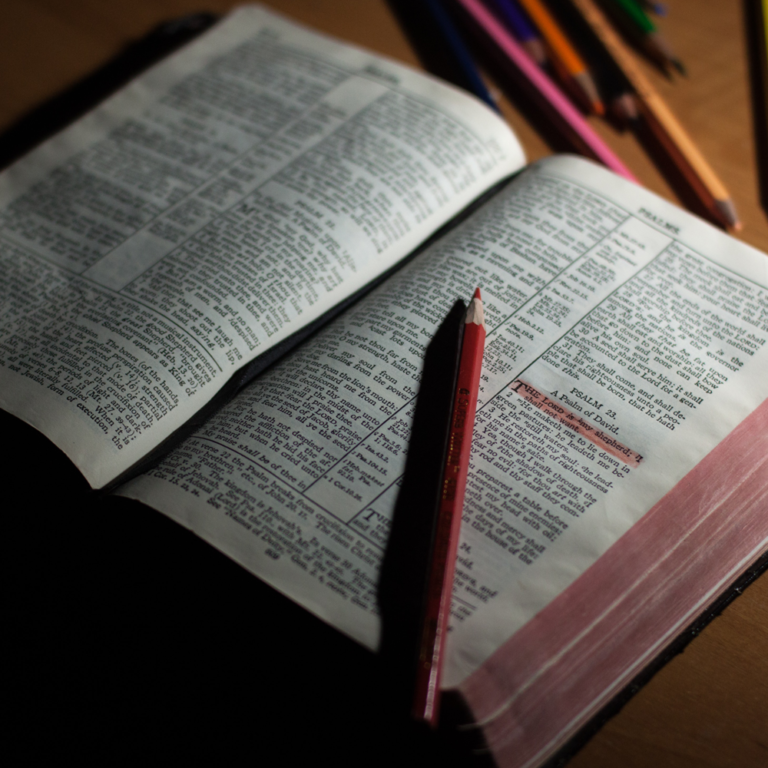
Our remarkable Bible, circa January 12, 1604 …
In early 1604, James I attempted to ease tensions in the church by holding a religious gathering, inviting representatives of the Church of England, including leading English Puritans.
On 12 January a number of bishops and ministers were invited to attend the Hampton Court Conference. The conference resulted in the 1604 Book of Common Prayer and, in the commissioning of the King James Version of the Bible, completed in 1611.
This article, from the December 2004 CViE Newsletter, reminds us of the remarkable providences of God in ensuring that a wholly reliable translation would be produced.
In January 1604 James 1st, the new King of England, held a conference at Hampton Court with Church leaders, including Puritans. Because there were objections expressed to some renderings in the existing English versions of the Holy Scriptures the King determined that a new translation be undertaken. The emphasis was to be on accuracy. It was to become known as the ‘Authorised Version’ (A.V).
In the title page of many King James A.V. Bibles it is stated that the pages contain “the Old and New Testaments, translated out of the original tongues and with former translations diligently compared and revised by His Majesty‟s special command”. King James himself specified the regulations under which the translation was to be accomplished.
There were 47 translators appointed, all renowned for their command of the Hebrew and Greek languages. By regulation the translators were divided into six companies and allocated portions of the Scriptures.
- 10 Translators at Westminster. [Genesis – 2nd Book of Kings]
- 8 Translators at Cambridge. [Chronicles – Song of Solomon]
- 7 Translators at Oxford. [Isaiah – Malachi]
- 8 Translators at Oxford. [Gospels, Acts, Revelation]
- 7 Translators at Westminster. [All the Epistles]
- 7 Translators at Cambridge. [although not part of Protestant Bibles] [Apocrypha]
Every member of each company by regulation had to translate the same portion of Scripture, and then meet together to compare what they had done. One person read and the others listened with their translation before them. If they found fault they spoke, if not he carried on reading.
Eventually a translation was reached which was agreed upon by the whole company. This was then sent to the other five companies for their examination. If they felt a doubt about any of the renderings then they would suggest an improvement and the reasons on which it was founded. The company responsible for the translation would either adopt it at once or, if they could not agree, refer it to a select committee of final revisers.
It took 7 years for the work to be finished. The labour was great, but correctness was secured by the plan.
The Authorised Version has withstood the ordeal of criticism for nearly four centuries and is still assessed by the most competent judges to be the most accurate translation of Holy Scripture into the English tongue.