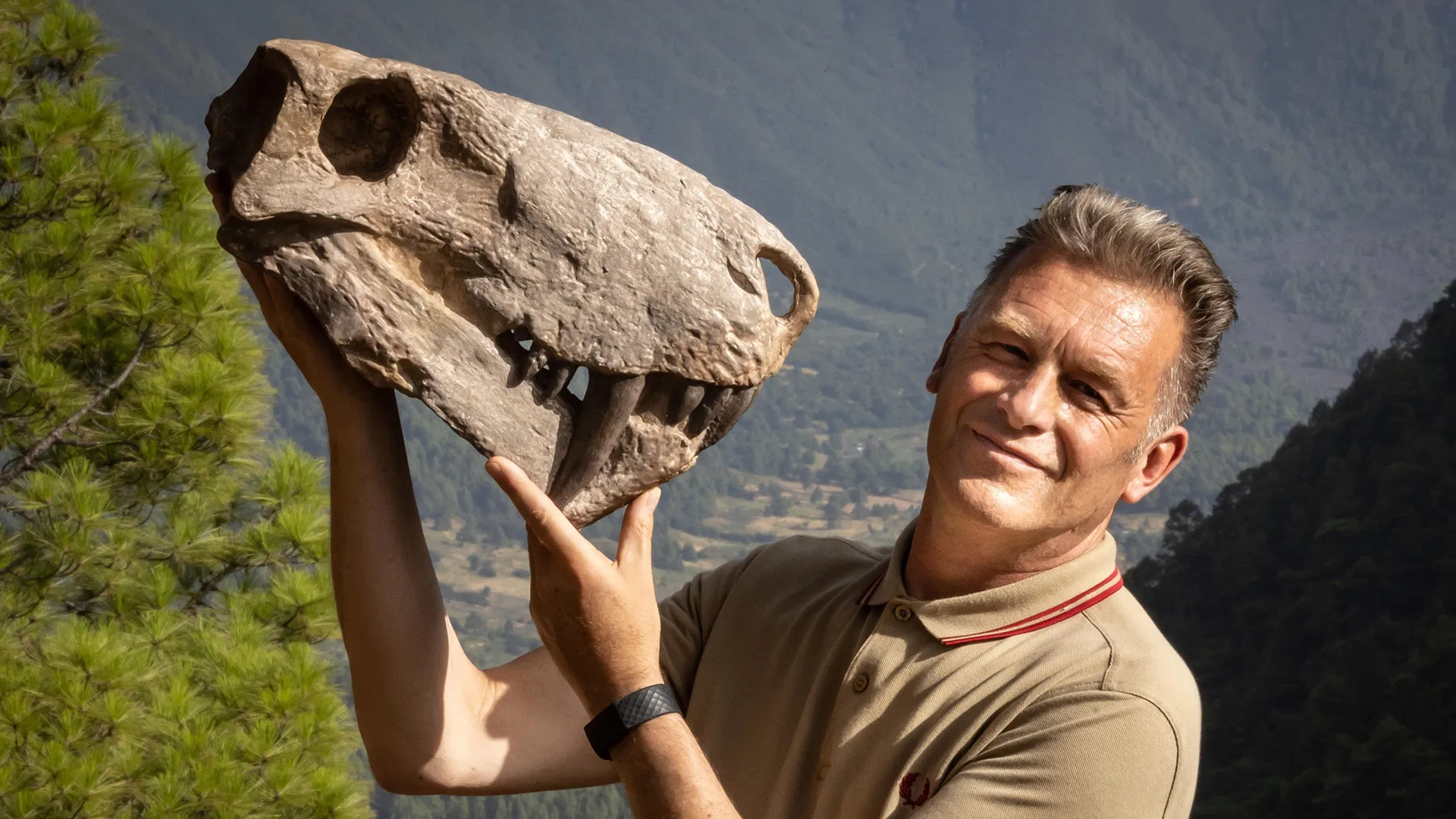
Evolution – A Review of the BBC Series – Part 3
Over the summer of 2026, the BBC released a much publicised series called Evolution presented by Chris Packham. This multi-part in-depth review of the BBC series has been prepared for CViE by a secondary school Head of Science.
This is Part 3 which looks at how how the series fits in with the national curriculum and how it might be used schools, then concludes by highlighting some additional resources to help equip you and your family.
Part 1 provided an introduction to the review, an overview of the series and general reflections on it from a Christian perspective.
Part 2 looked at some examples of poor science in the series.
How the Series fits in with the School Curriculum
Having previously outlined what Evolution is, how it contradicts a Bible-based Christian worldview, and how it is full of flawed science which does not stand up to scrutiny, I will now briefly explain where it relates to the UK school Science Curriculum. To assist with this the relevant sections from the Science National Curriculum in England are copied in the table below. The highlighted sections are those which relate directly to the theory of evolution.
Note that Scotland, Wales and Northern Ireland have devolved policy on education and, therefore, different curricula, although all mention similar things with regard to evolution.
|
Age |
National Curriculum Extract |
|---|---|
|
Year 6 (Primary – the first explicit mention) |
Evolution and Inheritance Pupils should be taught to:
|
|
Key Stage 3 (Years 7-9) |
Genetics and evolution – Inheritance, chromosomes, DNA and genes:
|
|
Key Stage 4 (Years 10 & 11) |
Evolution, inheritance and variation
|
It is important to recognise that much of what is in these National Curriculum extracts is legitimate science which does not contradict a Biblical understanding of the world. Living organisms within a particular species do exhibit variation (both genetic and physical or behavioural), some of these variations may confer an advantage due to a particular member of a species being better adapted for survival in a particular environment. This survival advantage does lead to the process of natural selection which can result in the change in the dominant characteristics within a given species at a particular time and in a particular place. Environmental changes do result in changes in the dominant characteristics in a population, or sometimes to extinction of particular species. I have highlighted these aspects of the National Curriculum extracts in blue – these are real, observable scientific facts. The archetypal school-science example, taught as evidence for evolution is the peppered moth, but in reality this is an example of observable natural selection and does not give any credence to the theory of evolution.
There are, however, aspects of the National Curriculum which do contradict the Biblical teaching that God created the earth in six days 6000 years ago, these I have highlighted in orange and they fall under two headings which I have really already addressed in my discussion of Evolution. Firstly, that the fossil record shows evidence of life millions of years ago and can be used as evidence for evolution, and secondly, that the observable process of natural selection has been the mechanism by which all the diversity of life on earth today arose from a common ancestor.
In many ways we should be encouraged that there are so few problematic statements with regard to evolution in the National Curriculum, but we must equip ourselves and our children to be able to recognise these falsehoods and to be ready with better, biblically consistent explanations for the evidence, such as the fossil record, which are presented as proof of evolution. I hope that this review will have gone some way to supporting with this, and in Section 5 I will signpost various helpful resources to this end.
With regard to how Evolution is likely to be used in schools, here are a few pointers:
- Sections such as those I have outlined which purport to show evidence through the fossil record of evolutionary changes could well be shown in lessons about the evidence for evolution. They may even be used as examples of natural selection, although there are actually very few examples which can accurately be described in this way within the series.
- “The Evidence” sections from the end of each episode might be shown to reinforce the message that ‘evolution is what scientists believe’ even though the evidence presented is lacking and there are many academic scientists who would disagree with it.
I think it is unlikely that the whole series, or even a whole episode, would be shown in a school setting as there is insufficient time in the curriculum and the focus of Evolution is somewhat removed from the principles which are taught in school science.
A Theological Perspective
Whilst it is important to be equipped with an understanding of the science to be able to refute evolutionary theory, even more vital is to understand the theological challenges it presents. Romans 5:12 states,
“Wherefore, as by one man sin entered into the world, and death by sin; and so death passed upon all men, for that all have sinned.”
This clearly teaches that death is the result of sin. We know that the first death was in the Garden of Eden when God killed the animals to provide Adam and Eve with clothes after they had sinned. If we accept evolutionary theory then there must have been millions of years of death before the first sin because there would have been millions of years of death before the first humans were alive to be able to sin. If death does not follow sin then the gospel is no longer the good news of salvation because the death of Jesus Christ would no longer have the power to atone for sin. Evolution cannot be made compatible with the Bible either scientifically or theologically. This, more than any scientific argument, is why it is so important that we and our children are rooted and grounded in the truth.
Resources to Equip You and Your Family
This review has covered a lot of ground and it has been impossible to write in detail about everything in Evolution. My aim has been to give you a flavour of the problems with the presentation and the science within the series from a Christian perspective. I would strongly encourage you to take time to learn more about Creation science and how the evidence we find in the natural world that we can directly observe, in the fossil record and in DNA, is all completely consistent with the Biblical creation account – God created the world and everything in it in six days about 6000 years ago.
There are a number of organisations which exist to do exactly this and I would encourage you to engage with their resources. Below I include links to some of these, and also links to specific articles which relate to some of the assertions made in the series Evolution. I hope these will be helpful in equipping you and your children to see through the arguments presented by popular science communicators such as Chris Packham in Evolution.
Young earth creation organisations
Articles which relate to evolutionary theory mentioned in Evolution
- The miracle of flight
- Archioptrex
- Gill arches
- Dolphins
- The heart – irreducible complexity
- The Ear – irreducible complexity
- A collection of articles about DNA similarity and common ancestry from a biblical perspective.
Truth in Science Summer School
Finally, if you are, or know of, a young person who is about to go away to university or is already there, Truth in Science run an annual summer school aimed at “preparing students for the onslaught of evolutionary and anti-christian ideologies both within their courses and the subtle pressures to compromise within the Christian student community”. This is usually held in early September.